Welding Apprenticeship WI
Boilermakers Local 107
Apply for the Apprenticeship
This will direct you to the Great Lakes Apprenticeship website. Please select Local 107
when filling out the application
How the Application Process Works
- We take a new class of apprentices every 6 months
- New classes typically start in January and July
- We pull the top applications a month before class starts and you will receive a letter in the mail 2-3 weeks before class starts
- Your completed application goes on the list in the order it was received. It stays on the list until it's selected
- Due to the current amount of applications, you may want to advance your application the following ways:
- If you are a veteran, use the Helmets to Hardhats program available through the VA
- Upload transcripts from a tech or vocational school where you have had a welding class
- Upload welding certificates you have
If you have any questions please contact Abe Inghram at broham@boilermakers107.com
A Career Built to Last: Join Boilermakers Local 107
For over seven decades, Boilermakers Local 107 has served as a pillar of the Wisconsin construction industry. Our mission is to cultivate the most highly skilled, productive, and safety-conscious workforce in the trade. We achieve this through a rigorous training system that prepares the next generation of tradespeople for excellence. If you are looking for a career that offers stability, elite benefits, and the pride of building infrastructure, a welding apprenticeship in WI with Local 107 is your gateway to the professional trades.
Earn While You Learn
Unlike traditional post-secondary education that often leads to significant student debt, our program allows you to build a career without the financial burden. Our welding apprenticeship in WI is a "dual-learning" model, combining paid on-the-job training with technical classroom instruction. As an apprentice, you are an employee from day one, receiving competitive hourly wages that increase as your skills develop.
Program Benefits Include:
- Progressive Wage Increases: Your pay grows as you hit specific training milestones.
- Comprehensive Benefits: Access to high-quality health insurance and retirement pension plans.
- Industry Certification: Graduate with nationally recognized credentials that verify your expertise.
- Lifelong Support: Membership in a brotherhood that advocates for your safety and fair treatment.
The Path to Journeyman Status
The journey to becoming a journeyman Boilermaker is a four-year commitment to craft mastery. Throughout the duration of the welding apprenticeship in WI, participants must complete a minimum of 6,000 hours of field experience supplemented by 144 hours of related classroom instruction per year. This ensures that every graduate is proficient in the diverse demands of field construction, from power plants and paper mills to refineries and shipyards.
Our curriculum focuses on the core competencies of the trade, including advanced arc welding, rigging, blueprint reading, and layout work. Because our jurisdiction covers the entire state, applicants for a welding apprenticeship in WI must be prepared to travel to various job sites and work in challenging environments, including heights and confined spaces.
Minimum Qualifications
- Must be at least 18 years of age.
- Must have a high school diploma or GED equivalent.
- Must possess a valid driver’s license and reliable transportation.
- Must be physically capable of performing heavy lifting and working in outdoor conditions.
While prior experience is not required, individuals with a background in vocational training or basic shop skills are encouraged to apply. We accept new classes of apprentices twice a year, typically in January and July.
In-Person Application Process
We hold in-person application sessions on the third Tuesday of every month. These sessions take place from 7:00 AM to 8:00 AM at our referral hall located in Brookfield. Please ensure you arrive promptly before 8:00 AM and bring physical copies of your birth certificate, high school diploma or GED, social security card, and driver’s license.
If you are ready to secure your future and master a specialized craft, contact our apprenticeship coordinator today to discuss the welding apprenticeship in WI. Our office can provide specific details regarding current pay scales, the work outlook, and the step-by-step application timeline.
Join the ranks of the most skilled welders in the region. At Boilermakers Local 107, we provide the tools, the training, and the opportunity—you provide the work ethic. Contact us at (262) 326-5580 to start your journey.
Request Apprenticeship Information
We will get back to you as soon as possible.
Please try again later.
Frequently Asked Questions
What is the distinction between "shop" work and "field" construction?
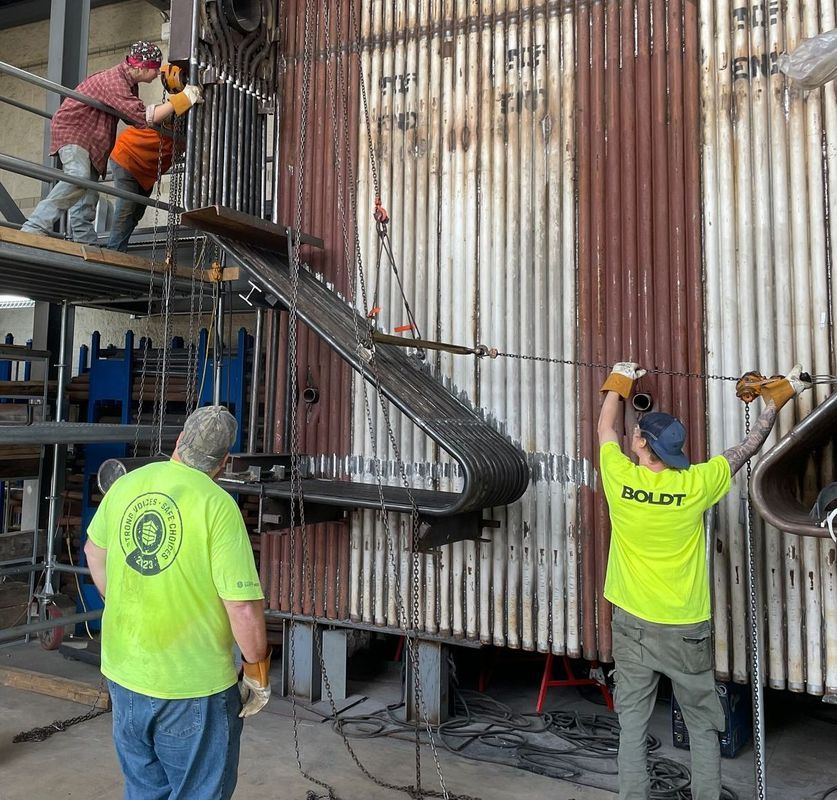
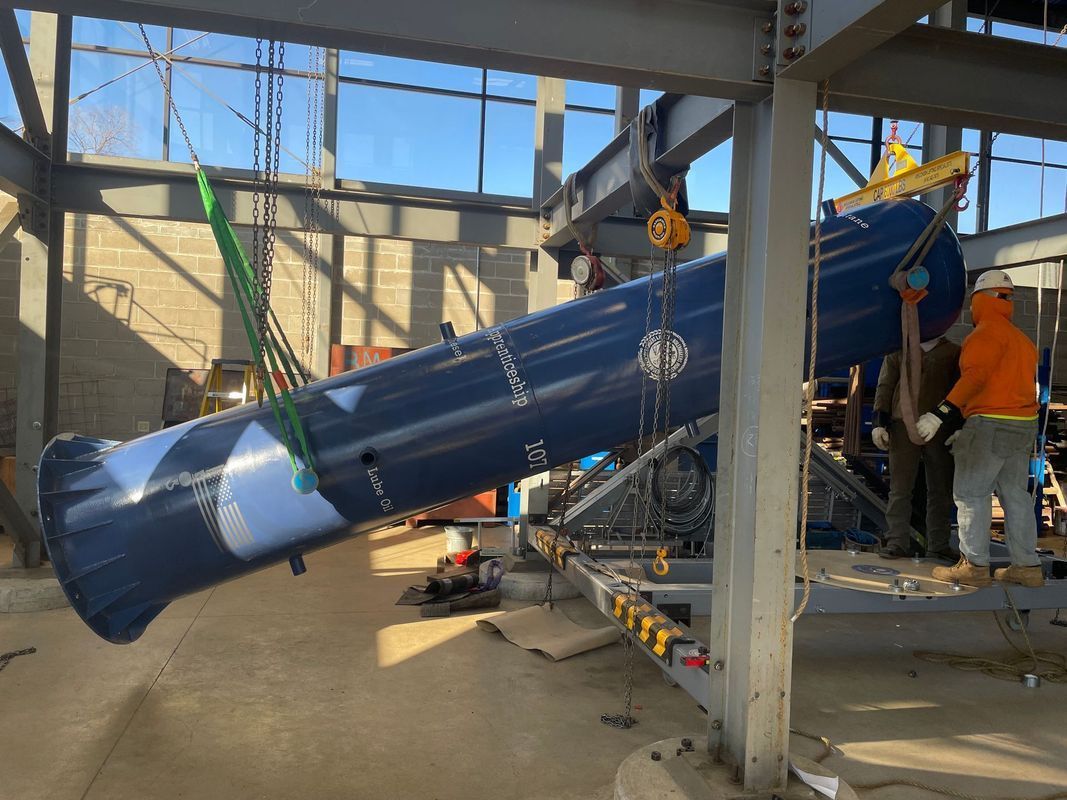
While many vocational programs focus on shop welding-where you work at a fixed bench in a controlled indoor environment-our program specializes in field construction. This means you are working on massive, live infrastructure like high-pressure boilers, storage tanks, and industrial heat exchangers. Fieldwork requires you to adapt to changing weather, varying heights, and complex rigging scenarios. It is a more dynamic environment that demands a higher level of problem-solving and physical coordination than a stationary factory position.
Does the program for a welding apprenticeship in WI provide support for veterans transitioning to civilian trades?
Yes. We have a long-standing history of working with "Helmets to Hardhats," a program designed to help transition active-duty military, National Guard, and Reservists into career opportunities in the construction industry. Depending on your Military Occupational Specialty (MOS) and the specific nature of your mechanical or technical training while in service, you may be eligible for advanced placement or credit toward your required apprenticeship hours.
What are the specific safety certifications included in the training?
Safety is our absolute priority. Throughout your four years, you won't just learn how to fuse metal; you will become a safety expert. The curriculum includes comprehensive OSHA 10 and OSHA 30 training, MSHA (Mine Safety and Health Administration) certification for work in quarries and mines, and specialized training in confined space entry and respiratory protection. These certifications make you an asset to any contractor and ensure you have the knowledge to protect yourself and your crew on high-risk job sites.
Is travel a mandatory part of being an apprentice?
Because our jurisdiction covers a wide geographical area, travel is an inherent part of the trade. You must be willing and able to commute to various industrial sites, which could be several hours away from your home. Some projects during your welding apprenticeship in WI may require you to stay near the job site for the duration of a "turnaround"-a period of intensive 24/7 maintenance at a facility. This mobility is what allows our members to stay consistently employed, as we follow the work wherever the infrastructure needs us most.
What kind of math skills are required for the technical coursework?
You don't need to be a mathematician, but a solid grasp of practical geometry and trigonometry is essential. Boilermaker work involves "layout," which is the process of marking metal plates for cutting and fitting. You will learn how to calculate angles for pipe offsets, determine the circumference of large vessels, and use formulas to ensure structural integrity during heavy lifts. If your math skills are rusty, our instructors provide the tools and tutoring necessary to master these trade-specific calculations.
Can I specialize in a specific type of welding after I graduate?
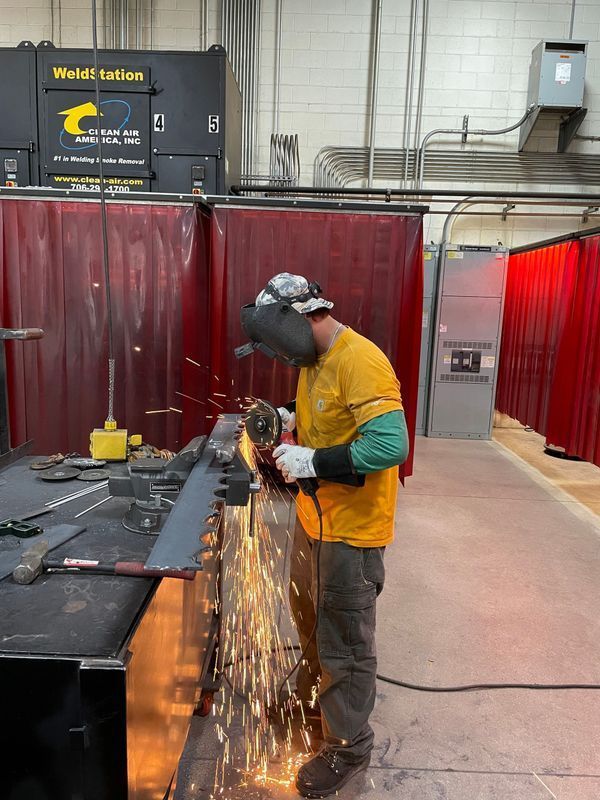
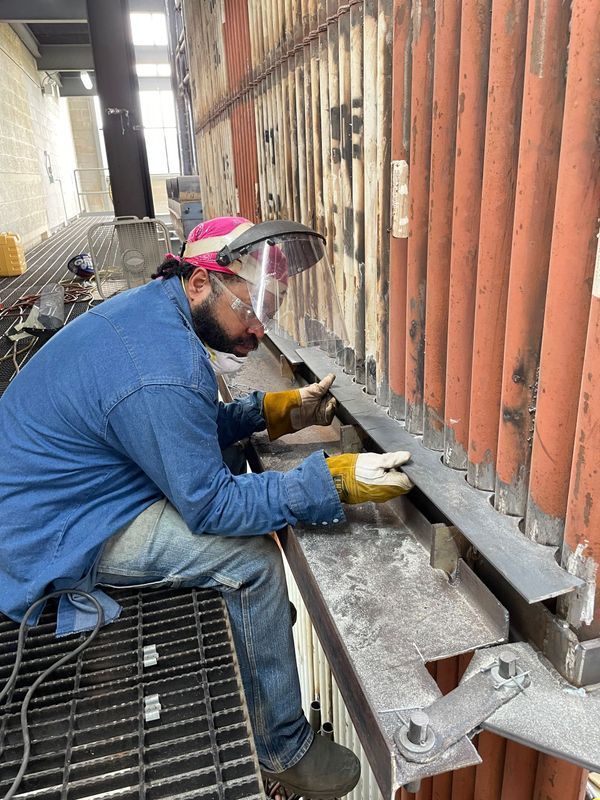
While the program provides a broad foundation in multiple processes-such as Shielded Metal Arc Welding (SMAW) and Gas Tungsten Arc Welding (GTAW)-many Journeymen choose to specialize. You might become an expert in "tube welding" for high-pressure power boilers or focus on heavy plate fabrication. The union provides ongoing "upgrade" training even after you finish your apprenticeship, allowing you to stay current with new technologies and exotic metals as the industry evolves. Reach out to our team at Boilermakers Local 107 today to get started with your welding apprenticeship!